About the robot-led revolution: entropy will win
 Nicola Cerantola
I’ve always been skeptical about the so-called “inevitable” robot-led revolution. Now I know why.
I’ve always been skeptical about the so-called “inevitable” robot-led revolution. Now I know why.
I couldn’t fully explain why—beyond a gut feeling shaped by engineering, physics, and thermodynamics—until I came across a paper that helped me articulate it.
Let me use a simple analogy: a shining brand-new, high-tech car.
It’s built with critical materials, complex systems, and layers of software controlling almost everything. When it’s new, it works flawlessly. Sensors are precise, systems are synchronized, and the dashboard is quiet.
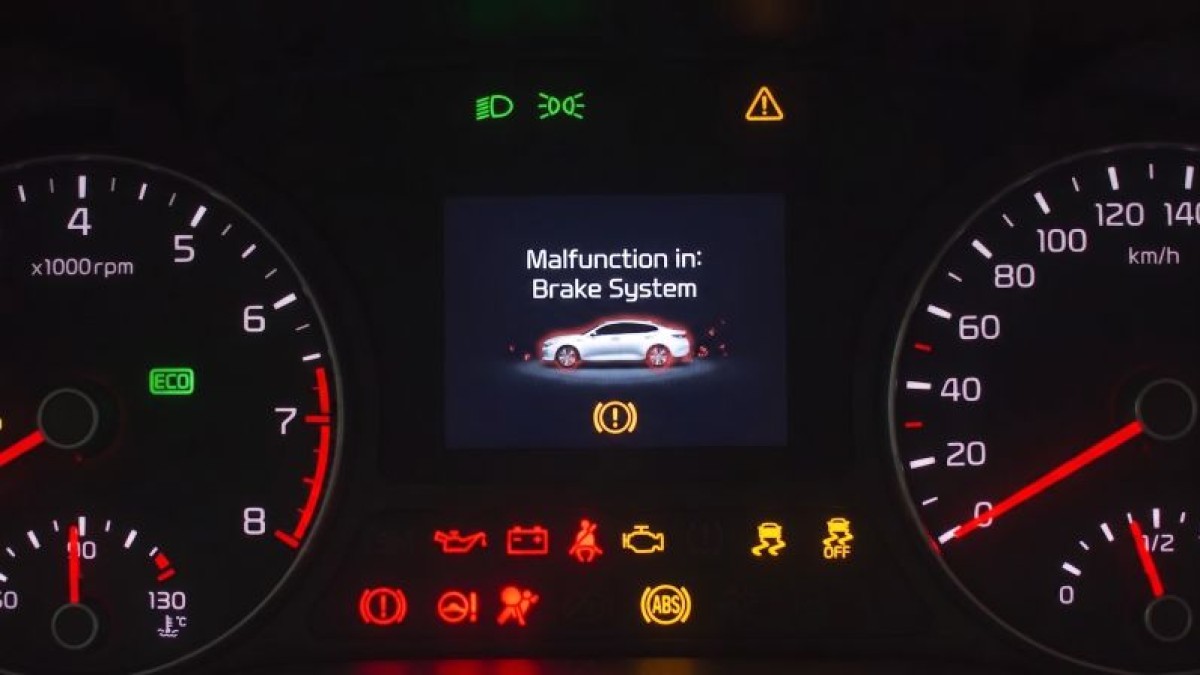
Then one day, a light appears:
“ ⚠️ Cruise control error. Service required.”
It’s minor. Easy to ignore.
But it’s just the beginning.
Gradually, more warnings show up. Sensors drift. Systems misalign. What was once seamless becomes a constant negotiation with failure. Eventually, the dashboard looks like a blinking control panel—more like a Las Vegas sign than a driving interface.
This is not a defect. It’s a feature of complexity.
And this is where my skepticism comes from.
As the paper argues, the cost of maintaining our high-tech civilization is rising faster than the benefits it delivers. Every new layer of innovation adds not only capability, but also fragility, dependency, and maintenance overhead.
We are building systems that are:
😅 increasingly complex
😅 deeply interdependent
😅 materially intensive
and 😅 energetically expensive to sustain
All of this relies on massive flows of finite resources and irreversible energy inputs.
We are fighing against entropy, but I'm afraid we are bound to lose.
The only way to face this “impossible” task may be to stop thinking like engineers of control, and start thinking like nature. Living systems don’t fight complexity—they evolve within limits, adapt, self-regulate, and regenerate.
Perhaps the path forward is not to outsmart entropy, but to design as life does: with resilience, sufficiency, and continuous renewal.
Originally posted on Linkedin: https://www.linkedin.com/posts...
Categorías: : Reflexiones